

Introduction
What is a Computer Network?
Definition and Components
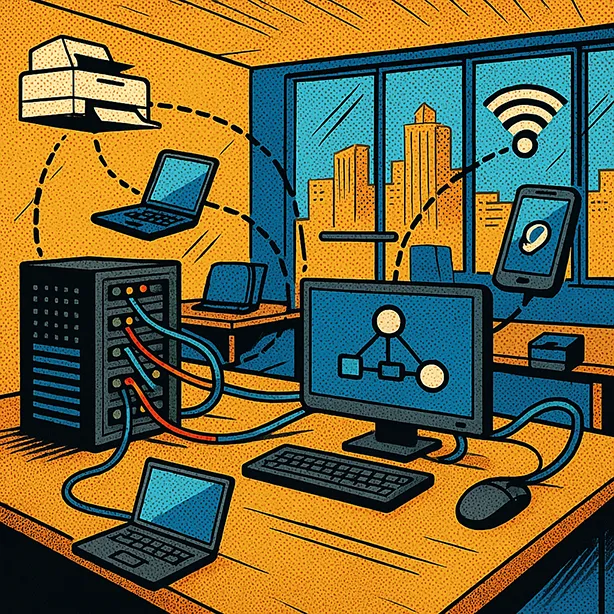
A computer network is a system of interconnected computers and devices that can communicate and share resources. These connections can be established through various mediums, including radio waves, wires, infrared, and optical fibers. At its core, a network allows devices to exchange data and resources, enabling collaboration and information sharing on an unprecedented scale.
The Role of Communication
Communication is the lifeblood of any network. Whether it’s sending an email, participating in a video conference, or accessing a shared database, the ability to communicate seamlessly is what makes networks invaluable. In today’s fast-paced world, the speed and reliability of this communication can make or break a business or personal interaction.
Types of Computer Networks
Local Area Networks (LANs)
Definition: LANs are networks that cover a small geographical area, such as a home, office, or group of buildings.
Characteristics:
- – High data transfer rates
- – Low latency
- – Easy to set up and manage
- – Examples: Home networks, office networks
Wide Area Networks (WANs)
Definition: WANs span large geographical areas, connecting multiple LANs and other networks.
Characteristics:
- Lower data transfer rates compared to LANs
- Higher latency
- More complex to set up and manage
- Examples: The Internet, corporate networks spanning multiple cities
Metropolitan Area Networks (MANs)
Definition: MANs cover a metropolitan area, larger than a LAN but smaller than a WAN.
Characteristics:
- Connects multiple LANs within a city or large campus
- Higher data transfer rates than WANs
- Used by governments and large organizations
- Examples: City-wide fiber optic networks
Personal Area Networks (PANs)
Definition: PANs are small networks used for personal devices, typically within a few meters of the user.
Characteristics:
- Very short range
- Low power consumption
- Easy to set up
- Examples: Bluetooth devices, wireless headphones
Network Topologies
Bus Network
Structure: All devices are connected to a central cable, or “bus.”
Advantages:
- Easy to set up
- Inexpensive
- Suitable for small networks
Disadvantages:
- Difficult to troubleshoot
- Performance degrades as more devices are added
Ring Network
Structure: Each device is connected to exactly two other devices, forming a ring.
Advantages:
- Equal access to network resources
- Easy to add or remove devices
Disadvantages:
- A break in the ring can disrupt the entire network
- More complex to set up than a bus network
Star Network
Structure: All devices are connected to a central hub or switch.
Advantages:
- Easy to set up and manage
- Isolates failures, improving network reliability
- Scalable
Disadvantages:
- Central hub can be a single point of failure
- More expensive than bus or ring networks
Essential Networking Hardware
Network Interface Cards (NICs)
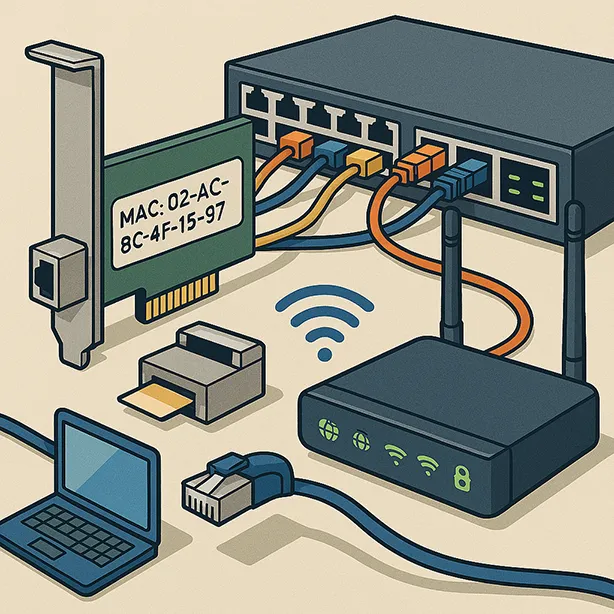
Function: NICs allow computers to connect to a network and communicate with other devices.
Key Features:
- Unique MAC address for device identification
- Supports various network protocols
- Available in wired and wireless versions
Hubs and Switches
Hubs:
- Connect multiple devices in a network
- Broadcast data to all connected devices
- Less intelligent and more prone to collisions
Switches: - More advanced than hubs
- Direct data to specific devices
- Reduce network collisions and improve performance
Routers
Function: Routers direct data packets between networks, ensuring they reach their intended destination.
Key Features:
- Support for multiple network protocols
- Firewall and security features
- Quality of Service (QoS) settings for prioritizing traffic
The Rise of Wireless Networking
Benefits of Wireless Networks
- Mobility: Devices can connect from anywhere within range
- Flexibility: Easy to set up and reconfigure
- Convenience: No need for cabling
Types of Wireless Networks
- Wi-Fi: Most common type, used in homes and public places
- Bluetooth: Short-range, used for personal device connectivity
- Cellular Networks: Provide wireless connectivity over large areas
Security Considerations
While wireless networks offer many advantages, they also present security challenges. Measures such as encryption, secure passwords, and network segmentation can help protect against unauthorized access and data breaches.
The Impact of Computer Networks on Society
Revolutionizing Communication
Computer networks have transformed the way we communicate, making it faster and more efficient than ever before. From instant messaging to video conferencing, networks have broken down geographical barriers and brought people closer together.
Enhancing Business Operations
Businesses rely on networks for everything from internal communication to customer service and data management. Efficient networks can improve productivity, reduce costs, and provide a competitive edge in the market.
Advancing Research and Education
Networks facilitate collaboration and information sharing among researchers and educators worldwide. This has led to accelerated discoveries and innovations, pushing the boundaries of human knowledge.
Empowering Individuals
With access to networks, individuals can learn, work, and connect with others like never before. Networks provide opportunities for personal and professional growth, enabling people to reach their full potential.
Conclusion
Computer networking is the invisible force that powers our digital world. From the simplest home network to the most complex global infrastructure, networks enable communication, collaboration, and innovation on a scale never before possible. By understanding the fundamentals of computer networking, we can better appreciate the technology that connects us and drives our modern society forward.





Leave a Reply